Every job below is one we do ourselves across Palmdale.
We frame new decks with joist hangers rated for outdoor use and set footings below the point where our soil starts moving. Ledger boards get flashed to keep water from finding the house framing. Most standard decks go from framing to finished boards in a week to two, depending on size.
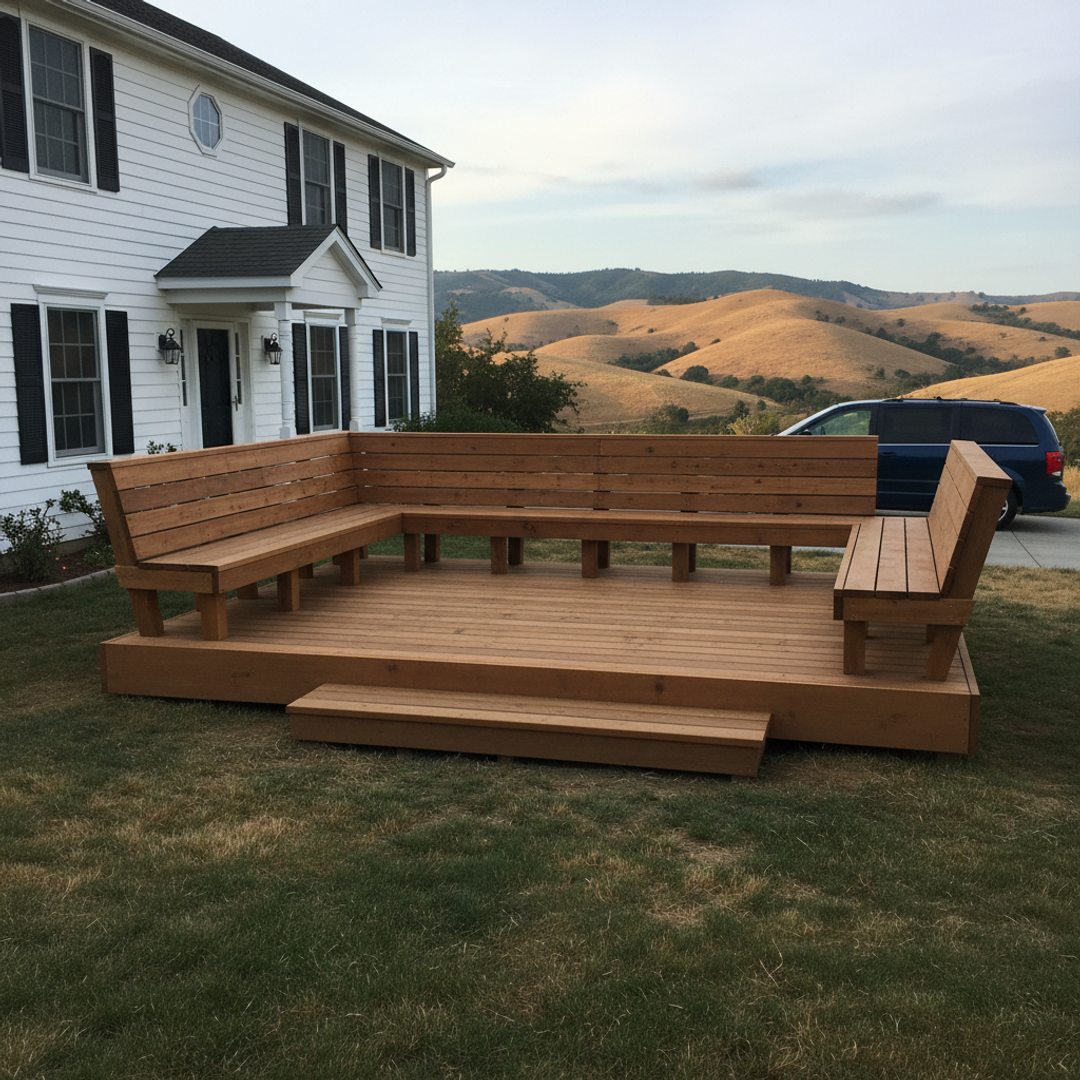
Some decks need to wrap around a pool equipment pad or step down a slope, and that changes the framing math. We'll walk your yard, take actual measurements, and draw the layout before any lumber shows up. If you want built-in seating or a change in elevation, we plan for it in the footings, not as an afterthought.
Soft spots in the decking usually mean the joists underneath are rotting, not just the board on top. We pull boards, check the frame, and replace what's actually failed instead of just capping over it. A loose railing post or a squeaky stair stringer gets fixed the same visit if it's a small job.
Antelope Valley sun bleaches and dries out wood fast, and a deck left unsealed for a couple summers starts to crack and splinter. We pressure wash, let the wood dry fully, then apply a stain and sealer rated for high UV exposure. Composite decking skips this step entirely, but the wood needs it every year or two depending on sun exposure.
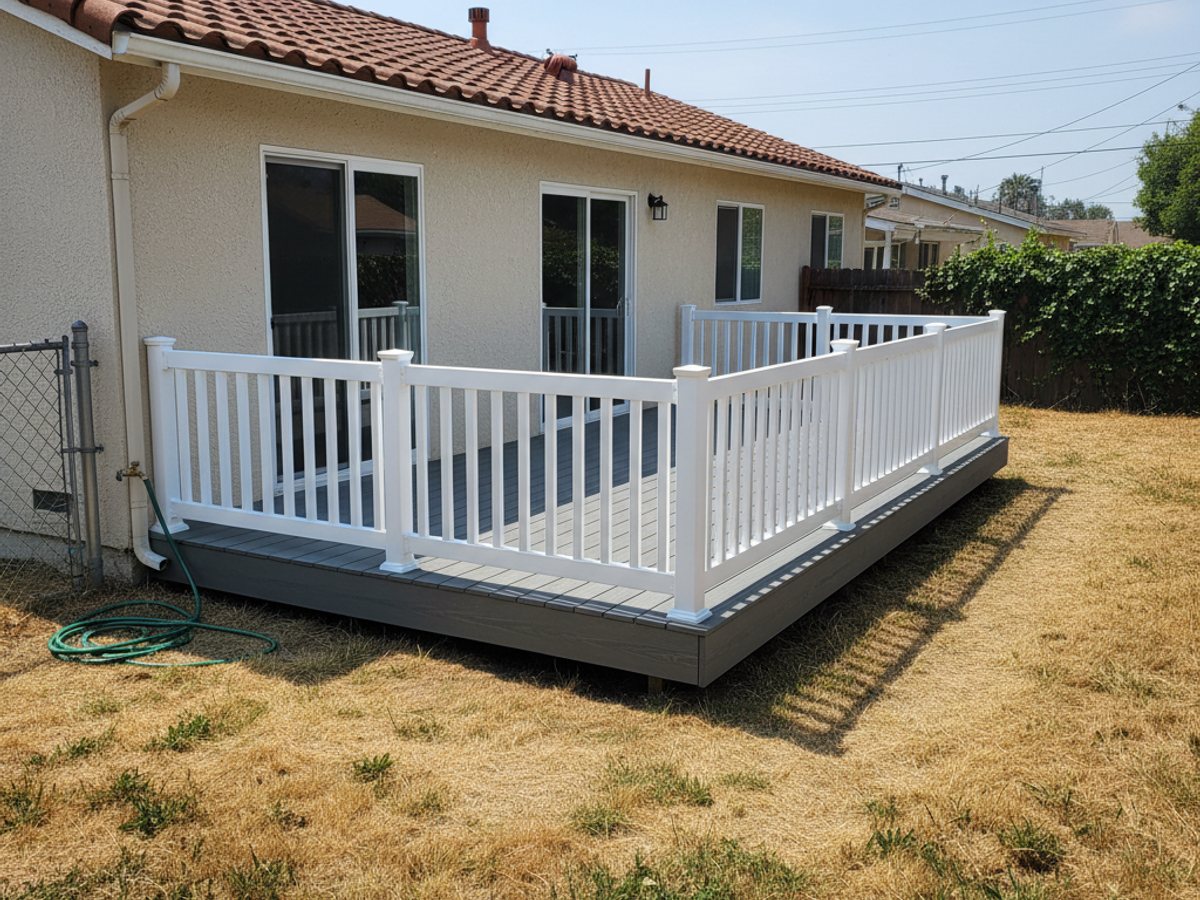
Composite boards like Trex or TimberTech don't rot, splinter, or need restaining, which matters if you don't want a yearly maintenance job. They do run hotter underfoot in direct summer sun than wood, so board color and shade matter more here than in a coastal climate. We install with hidden fasteners for a clean look, no visible screw heads.
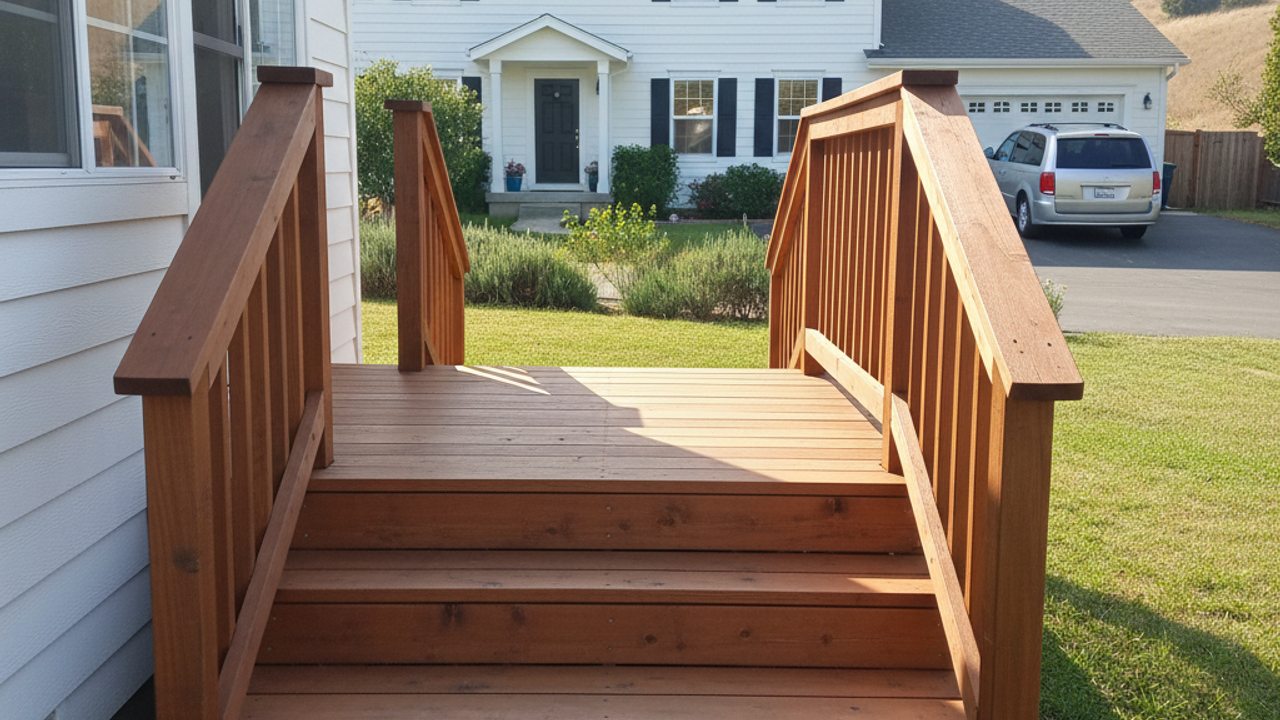
California code calls for guardrails at 42 inches on decks over 30 inches off the ground, with no gap wider than 4 inches between balusters. We build to that spec whether it's a wood rail, cable rail, or a composite system. Loose or wobbly railings on an old deck usually mean the post was never bolted to the frame properly, and we'll fix that at the connection, not just tighten a screw.
If the frame underneath is solid but the boards are cupped, splintering, or just tired, we can strip the old decking and lay new boards on the existing joists. It's a faster job than a full rebuild and costs less, as long as the framing passes inspection first.
A deck that steps down with the grade needs separate footing depths and beam sizes at each level, and the stair stringers between them have to land on solid framing, not just be screwed to the deck face. We size each level as its own structure tied into the next.
Old decks come down board by board so we can check what's reusable and haul off what isn't. We'll also flag if the ledger board did damage to the house framing behind it, which happens more often than people expect on decks over ten years old.
A lot of Palmdale decks get more use with some shade over them, given how many months a year direct sun makes the afternoon unusable. We build pergolas and covered structures tied into the same posts and beams as the deck below, sized for our wind loads.
Four steps, and no surprises in any of them.
You tell us what you want doing, we look at what is actually there, and we ask the awkward questions early.
In writing, itemised, free. If something might add cost later we flag it now rather than at the end.
Same crew throughout. We cover your floors, keep the dust down and tidy up before we leave each day.
You point out anything you are not happy with and we fix it before the invoice, not after.
Deck work across the Antelope Valley and the high desert beyond it.
What comes up once a deck project actually gets underway.
Describe the problem and we will tell you what it probably is. No obligation.